
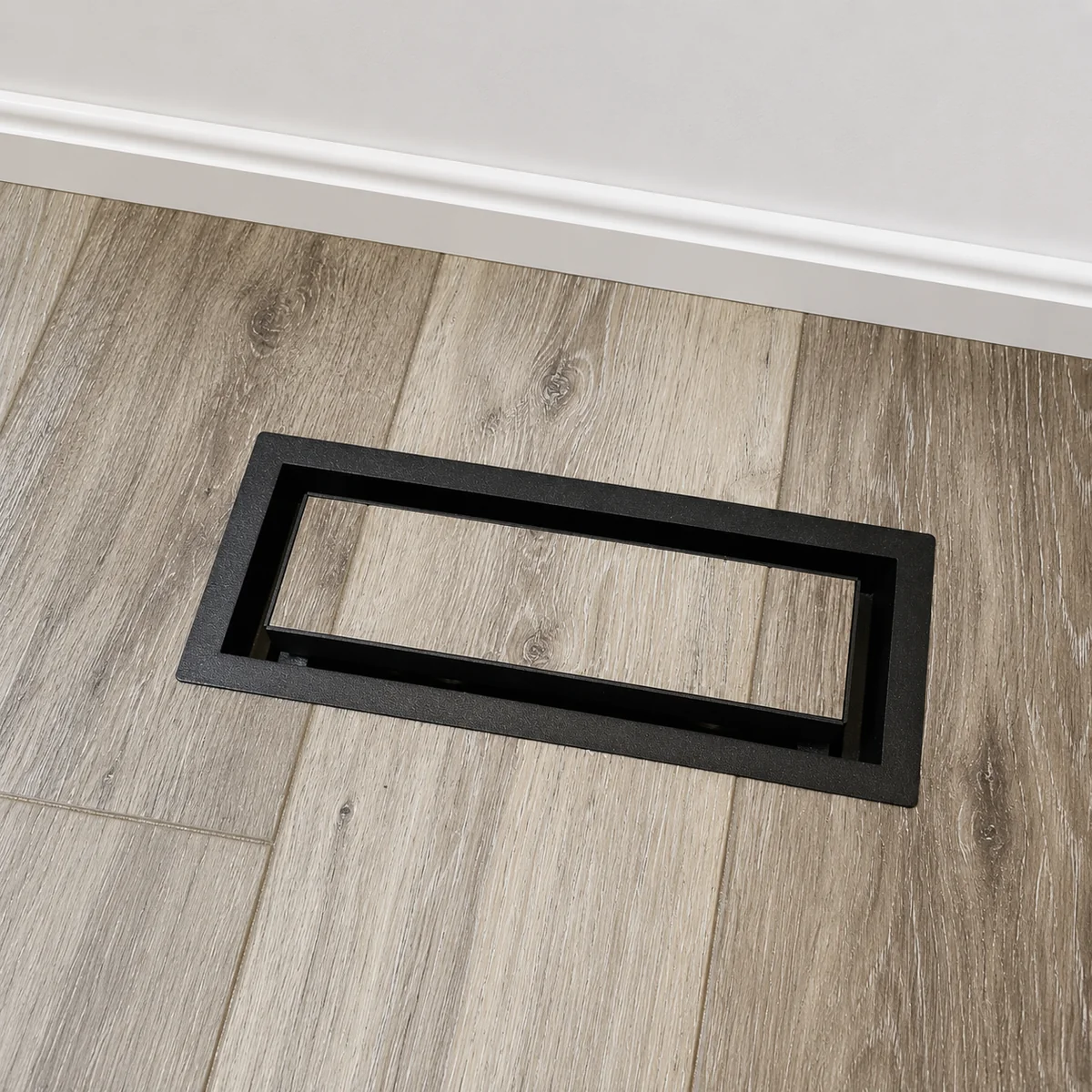
You spend weeks choosing the right planks, tiles, or carpet, and the room finally comes together. Then your eye lands on a metal grille sitting in the middle of the floor, and the smooth surface you worked for is interrupted. Heating and cooling vents are necessary, but they rarely look like they belong.
The good news is that a vent doesn’t have to be a visual afterthought. Some floor register covers are designed to take on the look of the surface around them, so the opening nearly disappears into the room. This guide covers how that works, which flooring types suit it, and what to check before you buy.
Why Floor Vents Stand Out in the First Place
Standard grilles are made to move air, not to match your décor. They’re usually a single flat color, and that color almost never matches the grain of oak, the veining of porcelain, or the pattern of a vinyl plank. Because floors are large, uninterrupted surfaces, even a small contrast draws attention. People notice it most in open-plan spaces, where one continuous floor runs from the kitchen to the living area.
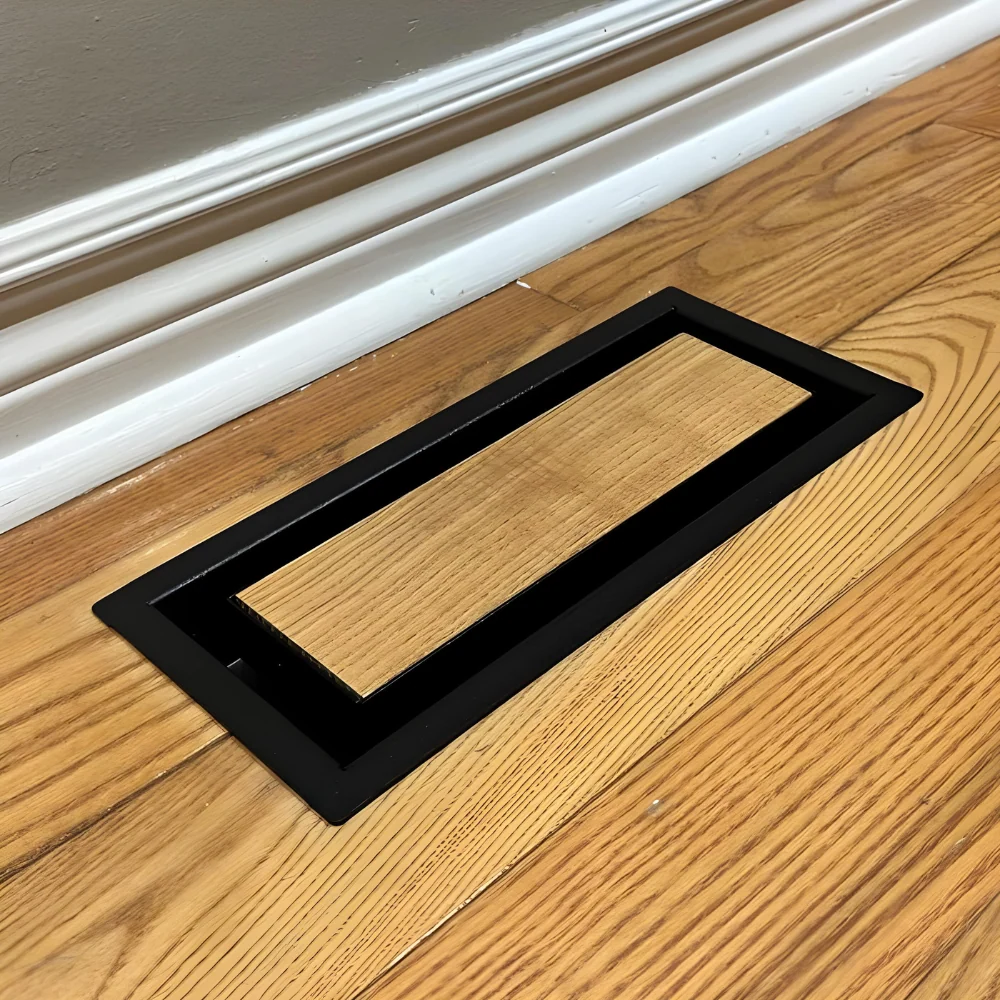
This is where a thoughtful design makes a difference. The Airwinks selection of floor register covers is built around a simple idea: instead of hiding the vent behind a decorative pattern, let the floor itself become the visible surface. When the top of the register carries the same material as the surrounding floor, the eye reads one continuous plane, and the vent becomes far less noticeable.
The Recessed Tray Behind the Matching Look
The key feature is a recessed tray on top of the register. This shallow well holds a piece of your own flooring, cut to fit, so the visible surface comes from the same material as the rest of the room. It is a different approach from painting or staining a grille, which only approximates the color and never reproduces the texture.
Underneath, the register still does its job. It has built-in flaps that let you adjust how much air flows into the room, so you keep control over comfort. One honest note: those flaps are made for adjusting airflow, not for shutting it off entirely. If you expect to close a vent completely, plan around that limitation rather than assuming the flaps will seal the duct.
Matching Tile, Hardwood, Vinyl, and Laminate
Each hard flooring type blends in a little differently, so it helps to think through your own material. With tile, a porcelain or ceramic piece set into the tray carries the color and finish of the room across the vent. Grout lines and tile sizes matter here, so it’s worth planning the position of the insert relative to nearby tiles.
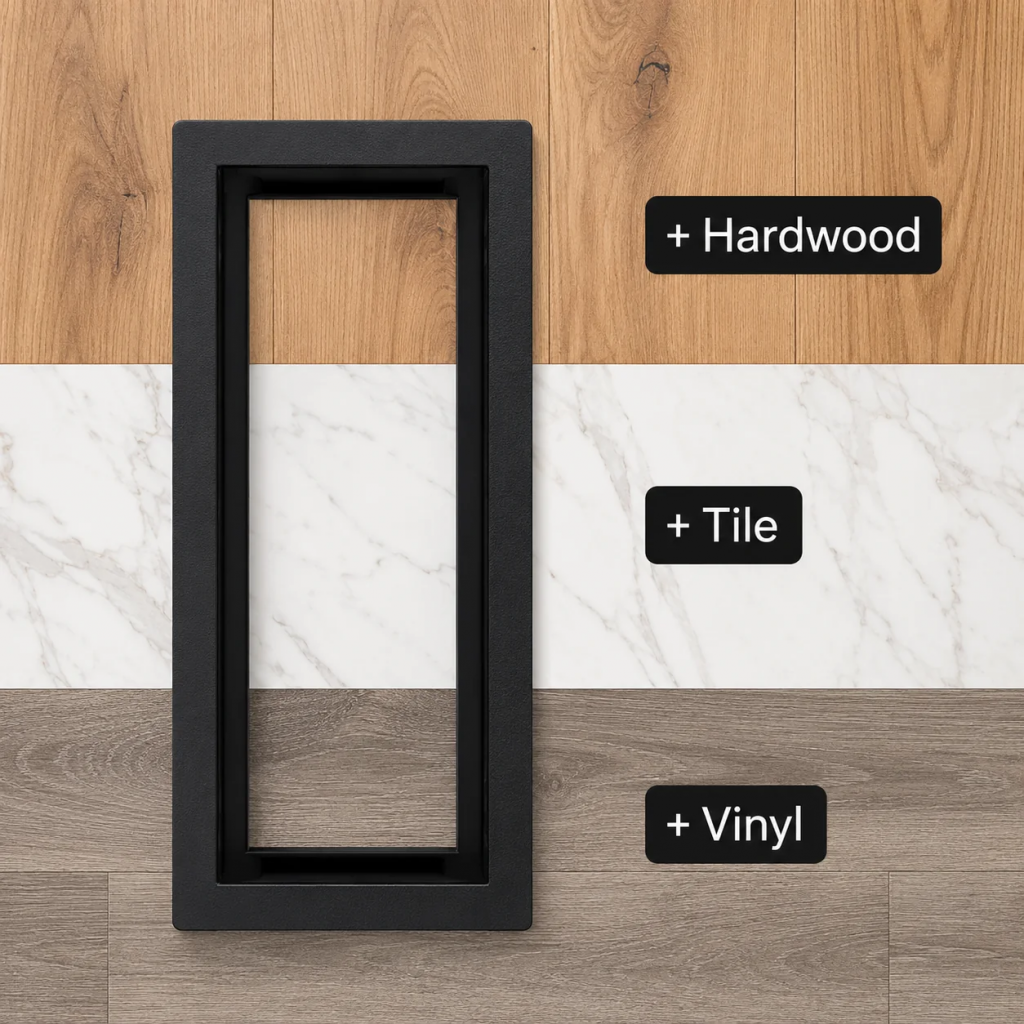
Hardwood works well because the grain does most of the visual work. Choosing a piece with a similar tone and direction helps the center of the register look like a natural continuation of the boards. Vinyl and laminate are similarly forgiving, since a leftover piece can echo the same pattern. Keep a few spare planks or tiles from your installation, because they’re the easiest source of a perfect match.
Carpet and Stone Without Losing the Cohesive Look
Carpeted rooms are often forgotten in conversations about vent covers, yet they can benefit just as much. A matching carpet insert gives the register a soft, coordinated surface instead of a hard metal one, which can feel more comfortable and look more intentional, especially in bedrooms and living rooms where texture matters.
Stone is another option when the requirements of the product are met. Natural stone has a distinctive character, and carrying it through the center of a register can look refined in an entryway or bathroom. Whatever material you choose, read the instructions on the product page first. Thickness and preparation requirements differ, and checking them early prevents wasted effort and ruined pieces.
Getting the Size Right Before Thinking About Style
A beautiful insert won’t help if the register doesn’t fit the opening. The most common mistake is measuring the old grille instead of the duct itself. The correct approach is to remove the existing register and measure the inside width and length of the opening. That measurement is what you match to a listed size.
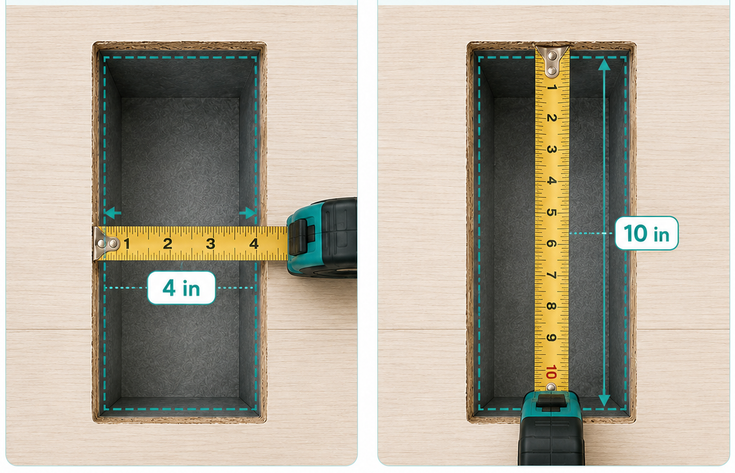
It’s also worth knowing that the stated size refers to the duct opening rather than the outside of the frame. The finished cover will extend a little beyond that nominal number, so allow for it in the surrounding floor. Measure every vent individually, since openings in the same house often differ. If your opening is unusual, a custom vent cover may be the better route than forcing a standard size to fit.
Choosing a Finish and Planning for Airflow
Once the size and insert are settled, the metal frame is the last visible detail. Choosing between black and white comes down to how the frame sits against your floor. A darker frame tends to look crisp against light flooring, while a lighter one can soften the edge against pale or neutral surfaces. Since the frame outlines the insert, it’s worth holding a sample against the floor before deciding.
Think about airflow at the same time. Since the flaps adjust rather than seal, position your furniture and rugs so they don’t block the register. A well-matched cover loses much of its charm if a sofa leg sits on top of it, and restricted airflow can leave rooms feeling uneven. A little planning protects both the look and the comfort of your space.
Final Thoughts
Vents are a fact of every home, but they don’t have to dominate a room. A register with a recessed tray lets your own flooring cover the opening, so the surface looks continuous whether it’s tile, hardwood, vinyl, laminate, carpet, or suitable stone. The process rewards a few careful steps: measure the duct opening accurately, set aside leftover flooring, read the product instructions, and choose a frame finish that complements your floor.
Handled with care, the result is a room that feels finished from edge to edge, with nothing pulling the eye away from the floor you chose. It’s a small detail, but small details are often what make a space look truly well designed.
No responses yet